

Automation is playing a major role in meeting these demands. Today’s liquid packaging systems are no longer limited to basic filling functions. Modern systems can integrate advanced controls, precision dispensing technology, data collection, robotics, inspection systems, servo-driven motion, and connected production monitoring to create a more efficient and intelligent packaging process.
Advanced Controls are Improving Process Management
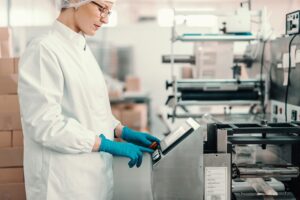
One of the most important technological advancements in liquid packaging is the use of sophisticated machine controls. Programmable logic controllers, human-machine interfaces, and recipe-driven operating systems allow manufacturers to manage production more consistently and efficiently.
Operators have been using touchscreen interfaces to select product recipes, adjust fill volumes, monitor machine status, track alarms, and manage changeover settings. This helps reduce manual adjustments and creates a more repeatable process from one production run to the next.
Recipe management is especially valuable for manufacturers that package multiple products, container sizes, or fill volumes. Instead of relying on manual setup each time, automated systems can store and recall critical parameters such as fill speed, pump settings, nozzle movement, container indexing, torque settings, and timing sequences.

Liquid products vary widely in viscosity, foaming characteristics, particulates, chemical compatibility, and flow behavior. Automation helps manufacturers address these variables through more precise filling technologies and controlled dispensing methods.
Modern automated filling systems may use servo-driven pumps, peristaltic pumps, piston pumps, gear pumps, flow meters, mass flow technology, pressure controls, diving nozzles, bottom-up filling, or vacuum-assisted filling depending on the product and application. These technologies improve fill accuracy, reduce product waste, and helps create a more consistent result across every container.
For products that are sensitive, viscous, foamy, corrosive, or prone to dripping, automated controls can fine-tune fill speed, acceleration, nozzle position, suck-back, and cutoff performance. This level of control supports cleaner fills, more accurate dosing, and a more reliable packaging process.
Sensors and Vision Systems are Strengthening Quality Control

Automation is also changing quality assurance in liquid packaging through the use of sensors, machine vision, and inspection technologies. Photoelectric sensors, proximity sensors, load cells, pressure sensors, flow sensors, and container detection devices help verify that each step in the process is occurring correctly.
Vision systems can inspect containers, caps, labels, lot codes, fill levels, orientation, and presence or absence of components. These systems help identify problems earlier in the process and can automatically reject nonconforming products before they move further down the line.
For regulated industries such as pharmaceuticals, diagnostics, and medical products, inspection and verification technologies can support stronger quality control, better traceability, and improved compliance readiness. Automated inspection can reduce reliance on manual visual checks and helps create a more consistent standard of review.
Robotics and Material Handling are Reducing Manual Intervention
Robotics are now common throughout liquid packaging operations. Robotic systems can support container loading, pick-and-place handling, case packing, palletizing, component feeding, and repetitive transfer tasks.
When integrated with filling, capping, labeling, and packaging equipment, robotics can help reduce bottlenecks and improve production flow. Robotic handling also supports better ergonomics by reducing repetitive motion, lifting, and manual product movement for operators.
For manufacturers dealing with labor shortages or high-volume production needs, robotic automation can improve consistency while allowing employees to focus on equipment oversight, quality assurance, maintenance, and process optimization.
Servo-Driven Technology is Increasing Speed and Flexibility
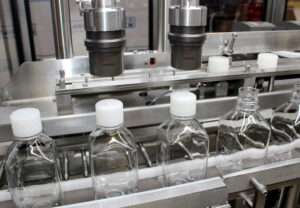 Servo technology has been another major advancement shaping liquid packaging automation. Servo-driven systems provide precise control over motion, speed, position, acceleration, and repeatability.
In liquid filling applications, servo-driven pumps and nozzle movement can help improve dispensing control and support faster, cleaner, and more consistent fills. In capping and container handling applications, servo drives can improve torque control, indexing accuracy, and changeover flexibility.
Because servo systems are highly programmable, they are especially useful for manufacturers that run multiple container sizes or product types. Adjustments can often be made through the HMI rather than through extensive mechanical changes, helping reduce changeover time and operator error.
Today’s liquid packaging machinery are increasingly connected to plant-level data systems. Equipment can collect and communicate important production information such as cycle counts, fill data, downtime events, alarm history, batch records, reject rates, maintenance intervals, and performance trends.
This information can help manufacturers better understand machine performance and identify areas for improvement. Data from packaging equipment can also support overall equipment effectiveness tracking by measuring availability, performance, and quality.
When connected with manufacturing execution systems, enterprise resource planning platforms, or supervisory control and data acquisition systems, automated packaging equipment becomes part of a broader smart manufacturing environment. This allows production teams to make more informed decisions based on real operational data rather than assumptions.
Predictive Maintenance is Improving Equipment Reliability

Automation is also helping manufacturers move from reactive maintenance to more proactive and predictive maintenance strategies. Sensors and machine data can help monitor equipment performance, detect early warning signs, and identify maintenance needs before they lead to unplanned downtime.
For example, systems may track motor performance, pump cycles, air pressure, torque readings, vibration, temperature, reject rates, or repeated alarm conditions. This data can help maintenance teams address issues before they affect production.
By using automated alerts and maintenance tracking, manufacturers can better plan service, manage spare parts, and extend the useful life of critical equipment. This supports improved uptime, lower operating risk, and better long-term cost control.
Integrated Lines are Streamlining the Full Packaging Process
Automation is having its greatest impact when individual machines are integrated into complete packaging systems. A fully automated liquid packaging line may include bottle unscrambling, rinsing, filling, plugging, capping, labeling, coding, inspection, accumulation, cartoning, case packing, and palletizing.
When these systems are properly integrated, manufacturers can reduce manual transfers, improve production flow, and create a more consistent end-to-end process. Communication between machines allows the line to better manage speed changes, stoppages, backups, rejects, and restart sequences.
Integrated automation also helps reduce bottlenecks by aligning each piece of equipment around the required production rate, container format, and product characteristics. This creates a more balanced and efficient operation.
Flexible Automation is Supporting More Complex Production
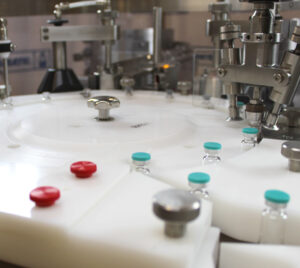 Many manufacturers are now packaging a wider variety of products in smaller batches, with more container styles, closure types, and labeling requirements. Automation is changing to support this need for flexibility.
Modern liquid packaging systems can be engineered with modular designs, quick-change tooling, adjustable guide rails, servo adjustments, recipe controls, and scalable machine platforms. These features help manufacturers switch between products and formats more efficiently.
Flexible automation is especially important for contract packagers and growing manufacturers that must serve multiple customers, product lines, or market demands. The ability to adapt quickly and have flexible options can become a major competitive advantage.
Automation is Improving Cleanability and Sanitary Design
Technology is also influencing the sanitary design of liquid packaging equipment. For industries that require clean or controlled production environments, automated systems can be designed with stainless steel construction, sanitary product pathways, clean-in-place or clean-out-of-place capabilities, minimal product contact points, and tool-less disassembly.
These design elements help reduce contamination risk, simplify cleaning, and support faster product changeovers. Automated controls can also help manage rinse cycles, cleaning sequences, and validation processes where required.
For pharmaceutical, diagnostic, cosmetic, personal care, and certain food/beverage applications, sanitary design and cleanability are critical to maintaining product quality and production confidence.
The Future of Liquid Packaging Automation

The future of liquid packaging will be shaped by greater connectivity, smarter controls, more advanced inspection, and increasingly flexible machine platforms. As manufacturing teams continue to adopt Industry 4.0 principles, automated packaging equipment will become more connected, data-driven, and capable of supporting continuous improvement.
And as organizations find the right balance with artificial intelligence — advanced analytics will play a greater role in identifying production trends, optimizing machine settings, predicting failures, and improving line performance. Remote access, augmented reality support, digital twins, and cloud-based monitoring may further improve service, training, troubleshooting, and system optimization.
Automation is no longer simply about replacing manual labor — it is about creating a smarter, more controlled, and more scalable packaging operation. By combining precision filling technology, advanced controls, inspection systems, robotics, data collection, and integrated line design, manufacturers can improve efficiency, quality, flexibility, and long-term competitiveness.
So, as the overall packaging industry continues to advance, companies that invest in reliable and adaptable automation will be better positioned to meet changing customer demands, support regulatory expectations, and build stronger operations for the future.
For more information on liquid filling and closing solutions, please call 866.258.1914 or email info@filamatic.com.